
Acrylic
Clean-cut signs, plaques, display parts and layered components with a wide choice of visual finishes.
Capability
CO₂ Laser ProcessingCutting, scoring and engraving suitable non-metal materials.
Cut · Score · EngraveCutting, scoring and engraving suitable non-metal materials.
GT Laser uses a GCC Spirit LS 60 W CO₂ laser for cutting and engraving compatible non-metal materials. We review the drawing, finish, quantity and intended use before agreeing a production route.
Request a Quote Send Your Files
Manufacturer reference image: GCC Spirit LS.
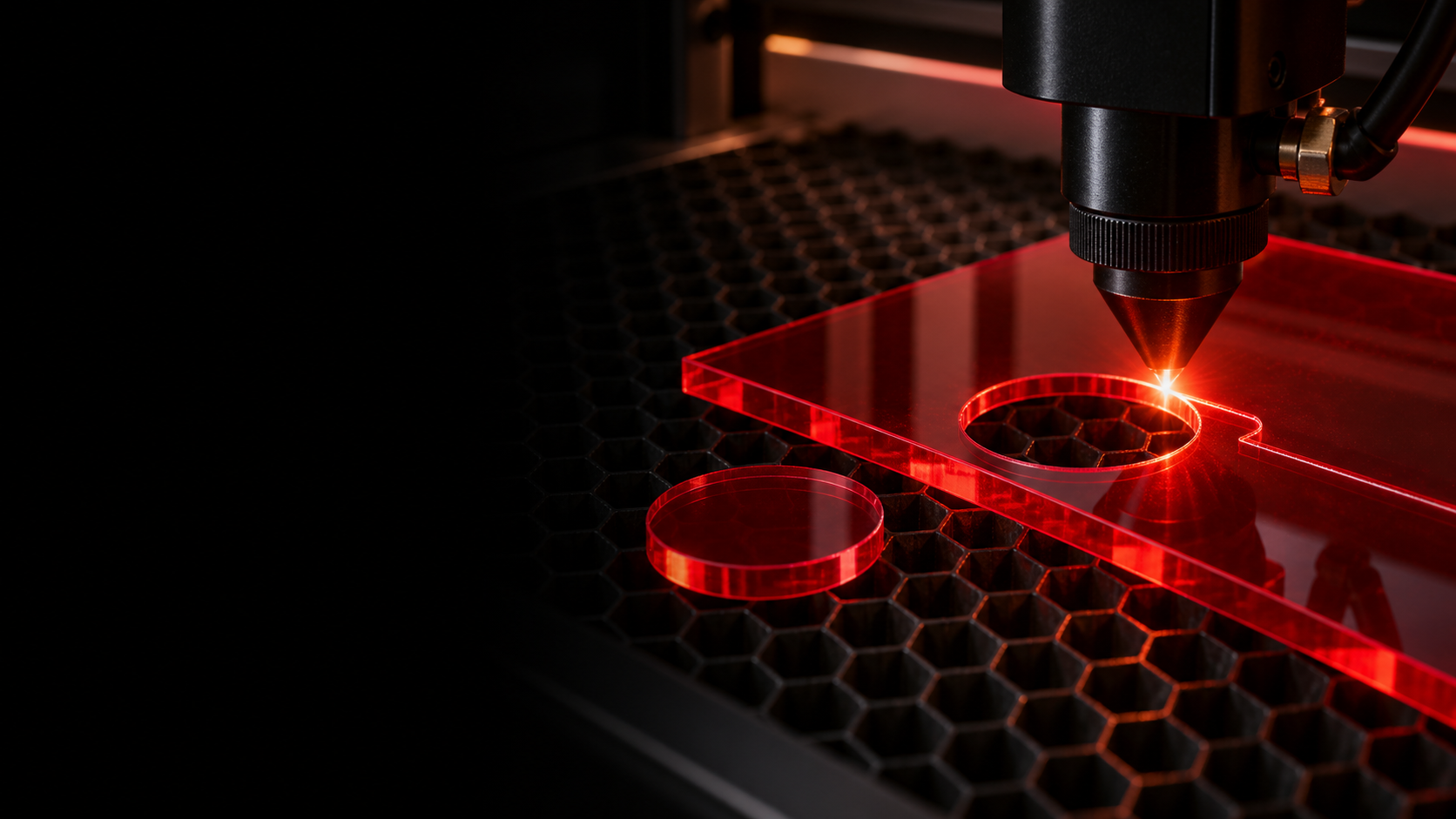
Generated illustrative image; not a GT Laser workshop photograph.
Capability overview
GT Laser uses a GCC Spirit LS 60 W CO₂ laser for cutting and engraving compatible non-metal materials. We review the drawing, finish, quantity and intended use before agreeing a production route.
Suitable applications
Customisation and data
Materials & process compatibility
Material grade, thickness, finish and intended use determine the appropriate processing route. These common starting points are confirmed against your requirement.
Clean-cut signs, plaques, display parts and layered components with a wide choice of visual finishes.
Lightweight high-contrast identification, labels, number discs and signs.
Natural engraved or cut signs and components, subject to species, thickness and geometry.
Approved plastics, card and other known materials after composition and process review.
Manufacturing technology
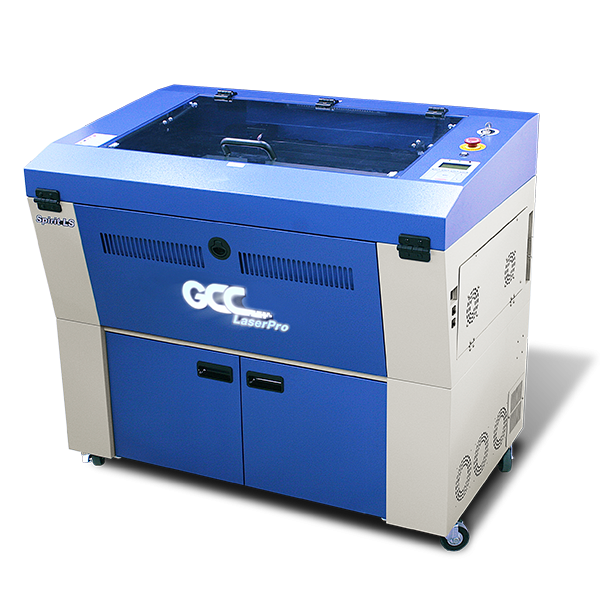 Manufacturer reference image: GCC Spirit LS.
CO₂ laser processing
Non-metal profile cutting, raster engraving and vector engraving/scoring for detailed custom geometry and repeat production.
Acrylic, engraving laminate, wood, plywood and selected compatible non-metal materials.
Custom sign components, nameplates, number discs, engraved labels and prototype parts.
Finished size, thickness and geometry are reviewed together before the production layout is confirmed.
Important limitations
What GT Laser needs from you
Related solution pathways
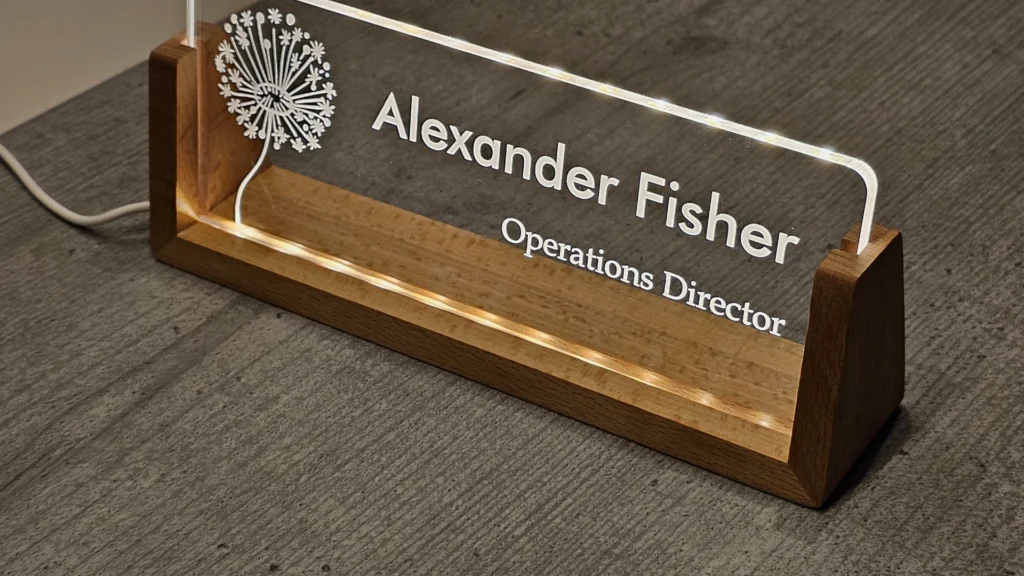
Consistent workplace signage and identification.
Explore solution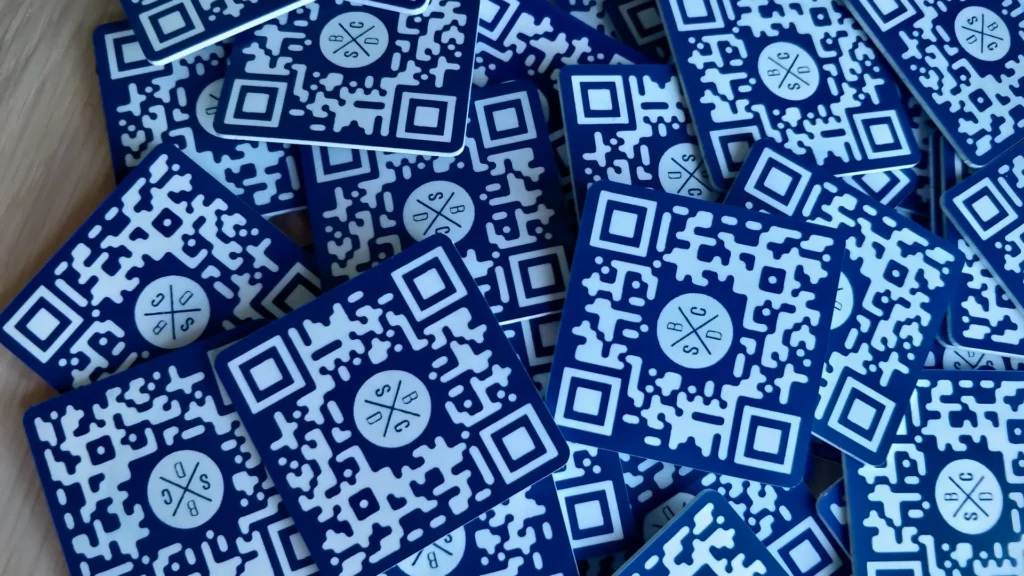
Customer-facing identification and display products.
Explore solution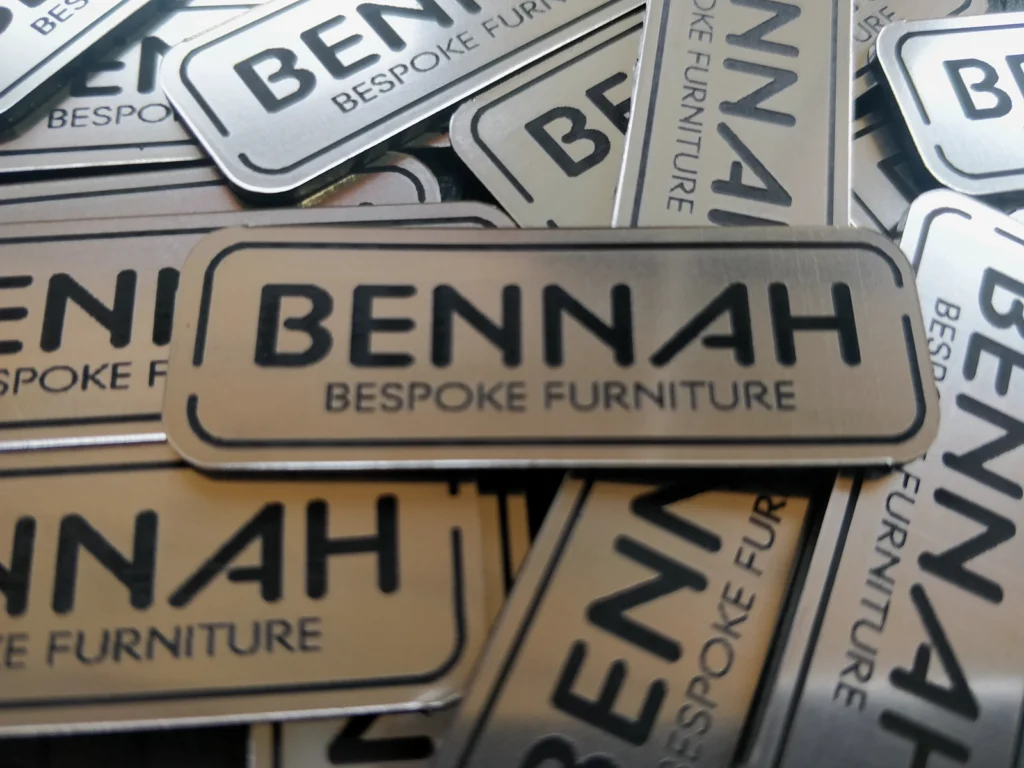
Prototype, small-batch and repeat production from drawings, artwork or a product requirement.
Explore solutionSupporting processes
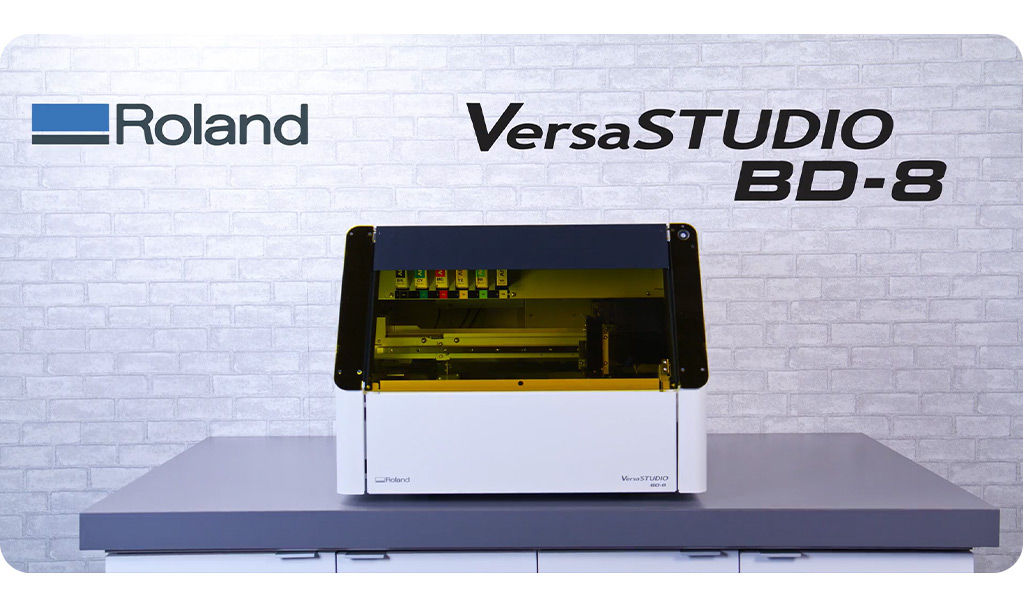
Direct-to-object printing on suitable flat materials and components.
Explore capabilityPractical guidance
Typical problems include open contours where a closed profile is required, duplicate paths, tiny loose pieces, insufficient spacing, excessive nodes and bitmap images without vector geometry. Suitability also depends on scale, material, thickness and required strength.
Stacked or coincident paths can cause an unintended second operation. Remove duplicate geometry and keep each intended cut or score path clear. GT Laser will flag obvious issues found during review.
Engraving laminate is a lightweight multi-layer plastic that reveals a contrasting core when engraved. It is useful for readable equipment labels, signs, number discs, QR tags and repeat variable-data identification.
Choose acrylic when rigidity, a premium finish, transparency, colour choice or layered construction matters. Choose engraving laminate when low weight, economical high contrast and straightforward identification are the priorities.
Suitable wood can be engraved and, depending on species and geometry, cut or UV printed. Natural colour, grain, resin and engraving tone vary from piece to piece; that variation is part of the material.
Share the material preference, drawing or artwork, dimensions and quantity so GT Laser can review the production route.