

Resources
Resources
Drawings · Artwork · Production Data
Frequently Asked Questions
Practical answers about artwork, materials, manufacturing, variable data, proofs, fixing and ordering.
Request a Quote Send Your Files
Generated illustrative image; not a GT Laser workshop photograph.
Edited composition based on GT Laser gasket photographs.
Practical guidance
Browse the complete FAQ library
If you are planning a custom project, you do not need to know every technical detail before contacting us. These answers cover the questions that most often affect quotation, artwork preparation and production.
59 questions available.
Ordering & Quotations
Include the application, dimensions, quantity, material preference, artwork or drawing, changing data, fixing method, target date and whether the requirement is one-off or repeat. If a detail is unknown, explain how and where the finished item will be used.
Yes. Describe the appearance, environment, dimensions, fixing, durability and intended use. GT Laser can narrow the options and confirm a suitable material and process during technical review.
Pricing depends on the material, component size, quantity, process time, artwork or data preparation, fixtures, proofs or samples, finishing, packing and delivery. A clear brief allows these factors to be reviewed together.
Yes, where the requirement is suitable. Prototype, first-batch and repeat-production quantities can be reviewed separately because setup, validation and unit-production requirements may differ.
There is no single minimum that applies to every custom product. Some work is practical as a one-off or prototype; other work becomes viable only as a batch. GT Laser confirms this after reviewing the specification, and can compare clearly defined material or fixing options where useful.
The right answer is Test
Artwork & Files
The current submission route accepts PDF, DXF, SVG, AI, EPS, CDR, JPG or JPEG, PNG, WebP, CSV and XLSX. The best format depends on whether the file contains technical geometry, vector artwork, imagery or structured production data.
Vector artwork is preferred for cut paths, technical geometry, logos, fine marking and scalable text. High-quality raster artwork can still be suitable for photographs, tonal engraving or UV printing. Send the best original file available.
Yes, as a visual reference, for suitable raster engraving or for print when the image has enough resolution. A JPEG or PNG does not provide a precise vector cut path, so cutting geometry should be supplied separately.
Convert fixed text to outlines or curves where practical. This preserves the intended letter shapes when the original font is unavailable. Text intended to change through variable data should remain identified as a controlled field.
Typical problems include open contours where a closed profile is required, duplicate paths, tiny loose pieces, insufficient spacing, excessive nodes and bitmap images without vector geometry. Suitability also depends on scale, material, thickness and required strength.
DXF is accepted by the current upload route and is useful for controlled geometry. DWG is not accepted by the online uploader, so contact GT Laser before submission if DWG is the only source. Include dimensions, material, quantity and marking position.
Yes. GT Laser can identify obvious production issues during preflight. Substantial tracing, recreation or design development may require additional work, which is confirmed before it is undertaken.
Stacked or coincident paths can cause an unintended second operation. Remove duplicate geometry and keep each intended cut or score path clear. GT Laser will flag obvious issues found during review.
Supply correctly sized artwork in its intended print position, embed linked images, outline fixed fonts and identify colour expectations, print side and any white underbase. A correctly prepared PDF is preferred.
Colour often needs a white underbase on dark, coloured or transparent items. Production-ready vectors may use the spot colour RDG_WHITE, or you can add an unambiguous note such as “WHITE UNDERBASE REQUIRED HERE”.
Use the guide for the intended operation. CO₂ guidance covers cut, score and raster geometry; fibre guidance covers surface marks and controlled data; UV guidance covers print artwork, white and viewing direction.
No. Features around 2 mm or smaller need review because strength and definition depend on the material, thickness, geometry and intended use. Include the finished dimensions so small features can be assessed in context.
Identify whether the print must reach an edge and show the finished outline separately. Bleed and print-to-edge allowances depend on the item, registration and production route; ask GT Laser to confirm them rather than applying one universal allowance.
State “PRINT VIEWED THROUGH THE MATERIAL” and identify both the viewing side and print side. The artwork orientation and colour/white layer order differ from front-surface printing and should be confirmed before production.
Flag confidentiality, ownership and any restrictions before sending sensitive files. Contact GT Laser first if an NDA or a particular transfer arrangement is required. Permission to manufacture is separate from permission to publish customer artwork or project images.
Materials & Manufacturing
No. GT Laser uses fibre laser technology for marking and engraving suitable metal parts, not in-house metal profile cutting. Complete drawing-controlled metal components can be discussed through the appropriate supply route, with marking and variable data as required.
Start with the application, appearance, environment, weight, rigidity, fixing and expected life. GT Laser then confirms a material and manufacturing route. No material is universally best for every product.
No. GT Laser will not knowingly CO₂ laser process PVC or other unsuitable halogen-containing materials. If a plastic or composite is unknown, provide its specification or supplier datasheet before sending it for review.
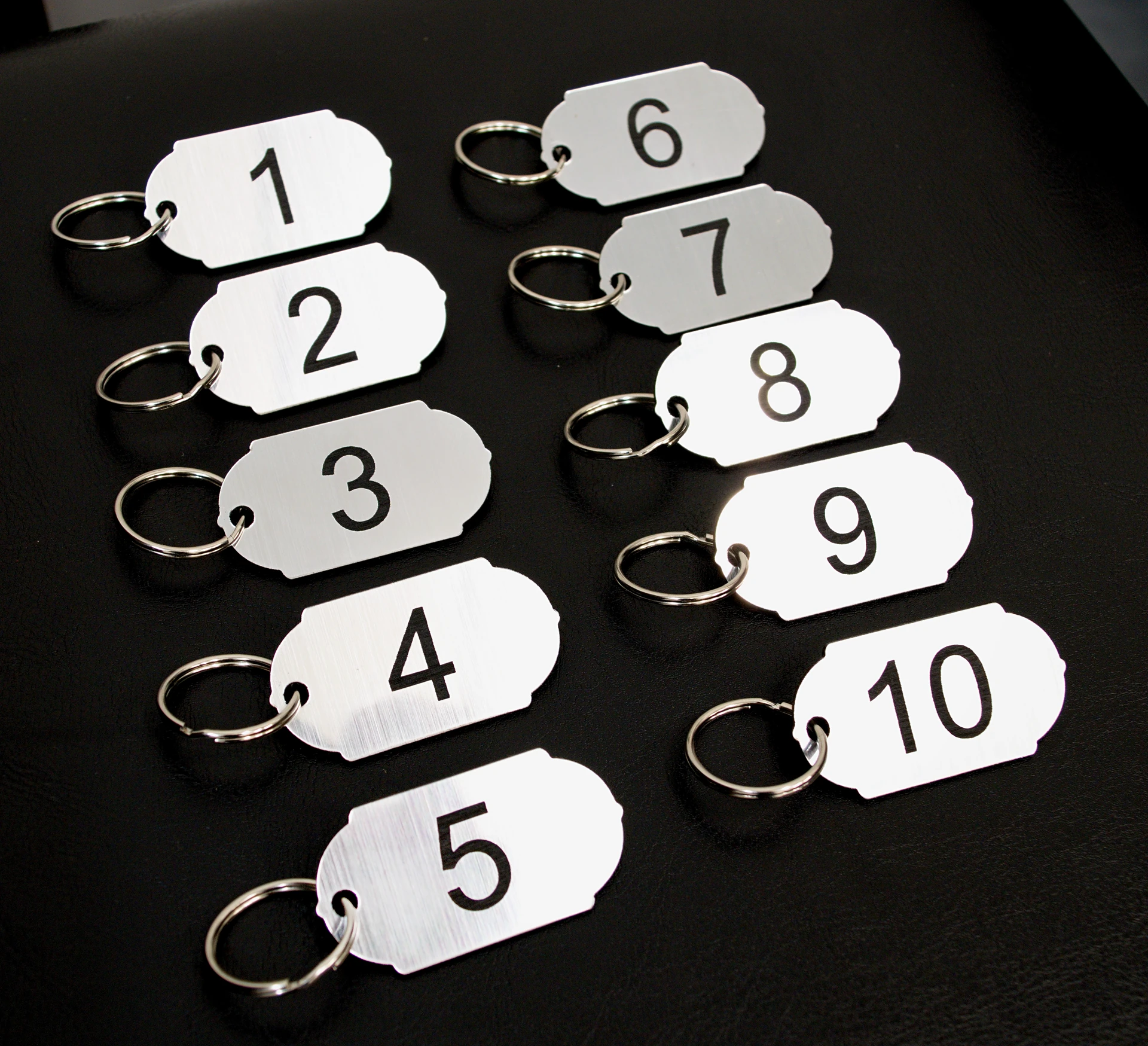
Engraving laminate is a lightweight multi-layer plastic that reveals a contrasting core when engraved. It is useful for readable equipment labels, signs, number discs, QR tags and repeat variable-data identification.
Choose acrylic when rigidity, a premium finish, transparency, colour choice or layered construction matters. Choose engraving laminate when low weight, economical high contrast and straightforward identification are the priorities.
304 is a common general-purpose stainless grade. 316 is often considered for wetter, harsher or more exposed environments because of its greater corrosion resistance. Final suitability depends on the actual exposure, finish, thickness and fixing.
Anodised aluminium provides a lightweight metal component with a professional surface finish and strong marking contrast on suitable grades. It is commonly considered for asset plates, serialised tags, QR plates and branded components.
Brass is normally selected for its warm, premium appearance. Untreated brass can tarnish and change with handling or exposure, so any outdoor requirement should define the environment and acceptable finish change before the material is selected.
Suitable wood can be engraved and, depending on species and geometry, cut or UV printed. Natural colour, grain, resin and engraving tone vary from piece to piece; that variation is part of the material.
Potentially, after the material, composition, geometry, finish and process have been reviewed. Unknown plastics or composites should not be sent for laser processing without a specification or supplier datasheet. A sample, test piece or spare may be requested.
QR, NFC & Variable Data
Locking can make the stored chip data read-only and may be irreversible. Approve and test the destination before requesting a lock. Changing content at a URL you control is different from rewriting the URL stored on the chip; the agreed chip and lock method determine what remains changeable.
Yes, for suitable products. Each item can contain a different approved URL or code value while retaining a common layout, material and production specification.
Yes, where appropriate. Supply the approved source URL, ID or code content in a structured spreadsheet or CSV. The customer remains responsible for confirming supplied content and destinations unless a separate validation scope is agreed.
Use Excel or CSV with one row per unique item where practical. Identify the total quantity, duplicate-copy rules, selected ranges, site groups and the human-readable fields that must accompany each code.
GT Laser will normally ask for the mismatch to be resolved before production. Missing rows, extra records, duplicates and quantity differences can otherwise create avoidable production errors.
Yes. An approved schedule can specify selected numbers, separate ranges, duplicates, blanks or identifiers such as A/B or L/R. The total quantity and number of unique records should be explicit.
Yes. A layout can combine a machine-readable code with an asset ID, serial number, URL, table number or instruction. The available area, contrast and viewing conditions affect the practical design.
For suitable products, yes. The destinations, programming requirements, chip position and whether NFC should be locked must be agreed before final production. A locked chip may become read-only.
GT Laser can perform agreed scan checks. Code size, contrast, clear space, finish, lighting, device behaviour and the installed environment can affect performance, so the required verification scope should be agreed before production.
Samples & Proofs
A digital proof may be used where it is appropriate to confirm layout, content or positioning. It does not prove physical material, adhesion, finish or marking appearance.
Potentially. A representative sample, exact prototype or short test batch may be recommended depending on the material, process, risk and production quantity.
A representative sample demonstrates a material, finish or process without reproducing every final detail. An exact prototype is intended to match the agreed product specification more closely. The appropriate route is confirmed before work begins.
Where the production plan makes it appropriate, a first-off item or photograph can form part of the agreed approval process. The scope and effect on timing are confirmed for the job.
A test may be recommended for unfamiliar, coated, customer-supplied or high-value items, when exact appearance matters, or when UV-print adhesion is uncertain. A spare or sample piece may be required.
Fixings & Installation
Depending on the product, options may include no fixing, self-adhesive backing, drilled holes, stand-off holes or another mechanical arrangement. The material, environment and mounting surface determine suitability.
Yes, where the component and manufacturing route allow it. Provide hole diameter, quantity and positions from reliable edges or datums, together with the intended fixing method.
Adhesive backing can be considered for suitable products. The product material, mounting surface, temperature, moisture, texture and permanence requirement must be reviewed.
VHB is a high-bond adhesive option for suitable surfaces and applications; it is not universally appropriate. Surface preparation, material compatibility, load, environment and removal expectations should be discussed.
Potentially. Supply the existing opening, hole positions, wall or mounting surface, required coverage and preferred new fixing points. GT Laser can review a suitable plaque size and layout.
Hospitality & Multi-Site
Yes. GT Laser can work from a controlled venue schedule containing site-specific quantities, identifiers, number ranges, URLs and delivery groups.
Yes. Different venues, tables or locations can use unique approved URLs while retaining a common product design. Supply the relationship between every item, location and destination in structured data.
Yes. Selected ranges, omitted numbers, duplicate copies, blanks and identifiers can be produced when they are clearly defined in the approved schedule.
Staged production, central delivery or location-based grouping can be discussed for the project. The required dates, quantities, labels and delivery structure should be confirmed before production.
There is no universal size. The code area, text, viewing distance, available table space, material, contrast and fixing all affect the result. QR-only content may fit a smaller format than QR plus instructions.
Delivery & Repeat Orders
Normally, where the approved artwork, drawing and production information remain available. Material availability, current specification and any requested changes are confirmed when the repeat is requested.
Yes. A repeat batch can use controlled revisions to quantities, numbers, URLs, text, dates or site data. Supply the complete replacement schedule and identify the revision clearly.
Both arrangements can be discussed. For separated orders, supply the location names, quantities, packing labels, addresses and required delivery sequence in an agreed schedule.
Retain the quotation or order reference, approved artwork or drawing revision, material and finish, dimensions, fixing specification and the final data schedule. Quote the earlier reference and describe every requested change.
Ready to discuss the requirement?
Share the application, quantity and any drawing, artwork or data available.