
Materials
Materials
Material · Finish · Application
Plywood & Engineered Wood
Best for larger signs, prototypes, panels and cost-effective wood-based components.
Request a Quote Compare all materials
Generated illustrative image; not a GT Laser workshop photograph.
Edited composition based on GT Laser gasket photographs.
What is it?
Plywood is made from bonded wood veneers, usually with alternating grain directions. Its layered construction provides useful panel consistency for signs, prototypes and display components. Other engineered wood products require their own composition review.
Appearance & characteristics
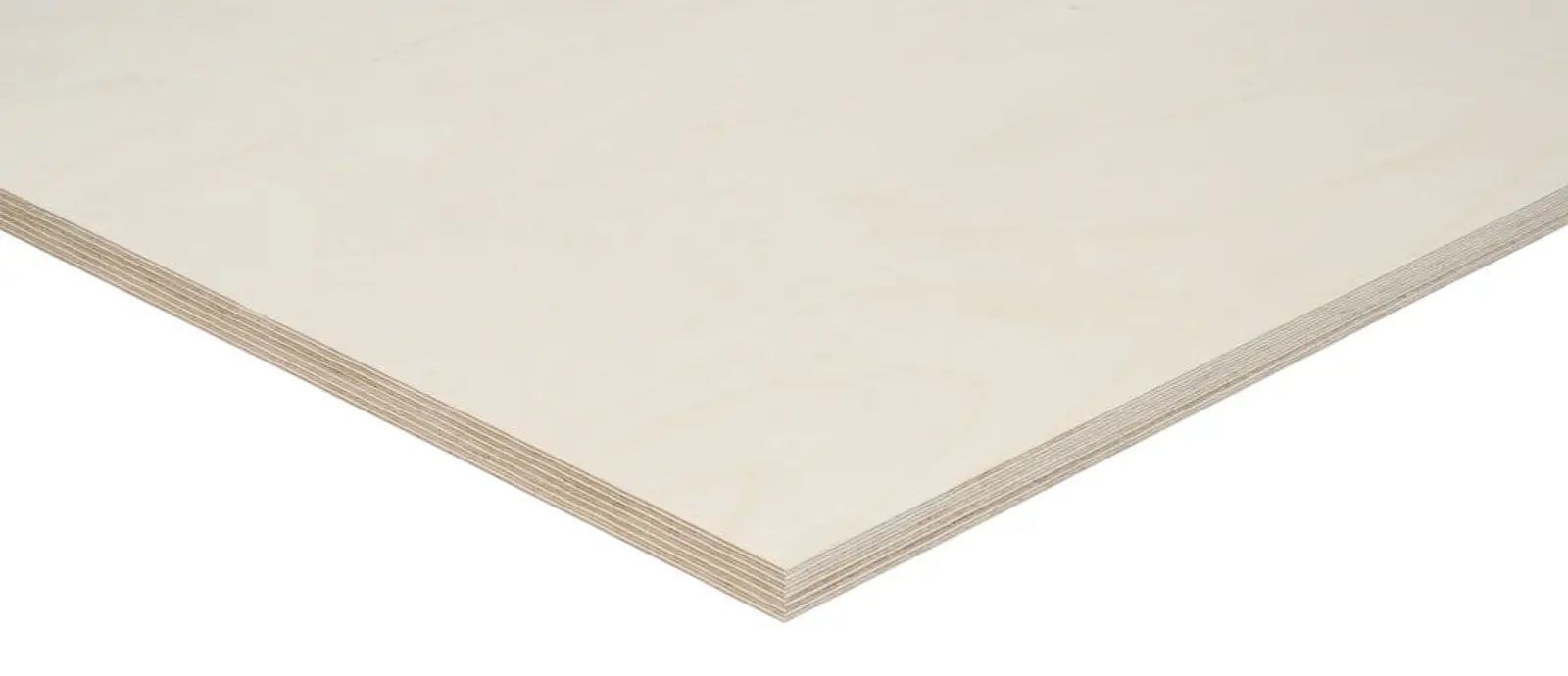
The veneer face retains wood grain while exposed edges show the layers. Panel stiffness, weight and flatness depend on thickness and construction. Glue lines, internal voids and differences between layers can change the cut edge and engraved result.
Why choose it?
- Useful in larger sheet sizes
- More dimensionally consistent than many solid woods
- Practical for prototypes and cost-effective panels
Typical applications
- Signs and logo panels
- Prototypes and display components
- Information boards
- Layered assemblies
Manufacturing processes
CO₂ cutting follows approved profiles for prototype parts, logo panels and sign components. Engraving creates lettering or graphics on suitable faces.
Sheet-based designs can support larger-panel applications, subject to component size and machine capacity. A large available sheet does not mean every full panel fits the machine.
Painting or finishing may be agreed for the product. UV printing is considered on suitable flat, prepared surfaces with the finish and adhesion reviewed.
Thicknesses & formats
Supply the product name or datasheet, veneer and glue specification, thickness and finished panel size. Internal construction and adhesive vary; not all plywood or MDF is automatically laser suitable.
Fixing options
- Holes and mechanical fixing
- Suitable adhesive
- Panel framing or no fixing
Confirm the mounting surface, hole positions, load and removal requirements before choosing the fixing.
Indoor & outdoor considerations
Outdoor use depends on the exact engineered product, glue, veneer, sealing and exposure.
Tell us about moisture, sunlight, handling and cleaning. Suitability is assessed for the product and installation, without a universal lifetime claim.
Design considerations
- Keep thin bridges and small tabs strong enough for the layered construction.
- Expect visible layers and potential darkening at a laser-cut edge.
- Define whether edges will remain exposed, be painted or be sealed.
- Outdoor use depends on the exact panel, adhesive, sealing and exposure—not just an exterior-looking finish.
Practical guidance
Plywood & Engineered Wood: practical questions
Suitable wood can be engraved and, depending on species and geometry, cut or UV printed. Natural colour, grain, resin and engraving tone vary from piece to piece; that variation is part of the material.
Potentially, after the material, composition, geometry, finish and process have been reviewed. Unknown plastics or composites should not be sent for laser processing without a specification or supplier datasheet. A sample, test piece or spare may be requested.
Typical problems include open contours where a closed profile is required, duplicate paths, tiny loose pieces, insufficient spacing, excessive nodes and bitmap images without vector geometry. Suitability also depends on scale, material, thickness and required strength.
No. Features around 2 mm or smaller need review because strength and definition depend on the material, thickness, geometry and intended use. Include the finished dimensions so small features can be assessed in context.
Potentially. A representative sample, exact prototype or short test batch may be recommended depending on the material, process, risk and production quantity.
Discuss Your Requirement
Send the application, dimensions, quantity, material preference and any drawing, artwork or data. We will review the suitable production route.