
Materials
Materials
Material · Finish · Application
Stainless Steel
Best for durable industrial identification, equipment tags and applications requiring a genuine metal component.
Request a Quote Compare all materials
Generated illustrative image; not a GT Laser workshop photograph.
Edited composition based on GT Laser gasket photographs.
What is it?
Stainless steel is a family of chromium-containing steel alloys chosen for strength, an industrial appearance and corrosion resistance. Grade, finish and exposure matter: stainless is not one universally suitable specification.
Appearance & characteristics
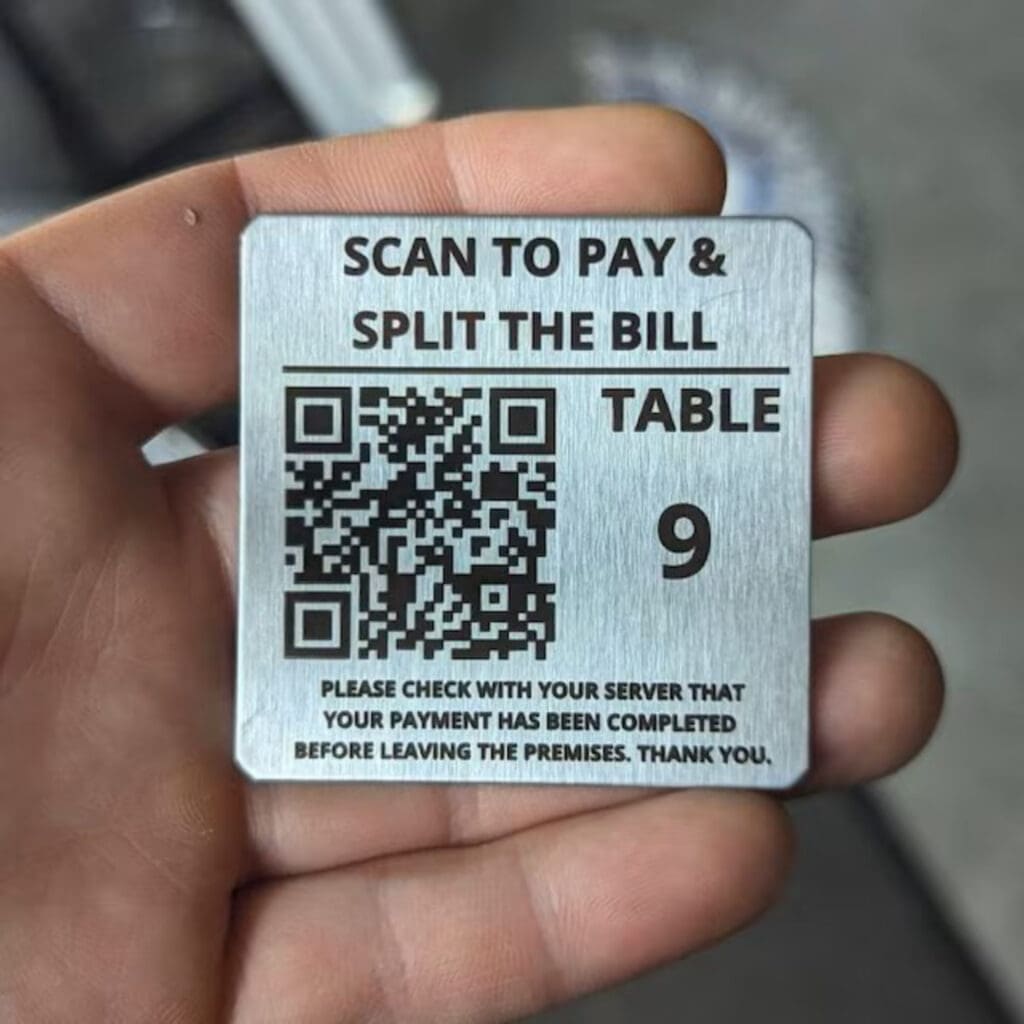
A rigid, comparatively heavy metal with a genuine metallic surface. Brushed finishes introduce a directional grain; smoother finishes reflect light differently and can alter the apparent contrast of a mark. Specify the required finish rather than relying on a photograph.
Why choose it?
- Mechanical strength
- Professional industrial appearance
- Suitable for fine permanent identification routes
- Useful where corrosion resistance matters
Typical applications
- Equipment tags and asset plates
- Machine identification and serialised components
- QR or Data Matrix tags
- Rating plates and durable plaques
Manufacturing processes
The MOPA fibre laser marks or engraves compatible surfaces for equipment identification, serial numbers, fine text, logos and QR or Data Matrix codes. Contrast and depth are agreed for the actual finish.
Structured data supports different identifiers on each item, with the code and human-readable text kept in the approved layout.
Custom components can be supplied to drawing and marked to specification. Provide the profile, holes, datums, grade and finish with the marking requirements.
UV printing can add full-colour information where the surface, adhesion and service environment have been assessed.
Thicknesses & formats
Supply the required grade, thickness, finished dimensions, surface direction and hole arrangement. 304 can suit general-purpose requirements, while 316 can suit more demanding corrosion exposure. The application determines the grade; 316L is a lower-carbon variant used where the engineering specification calls for it. No grade or thickness is promised as held stock.
Fixing options
- Specified holes
- Suitable adhesive systems
- Mechanical or no fixing
Confirm the mounting surface, hole positions, load and removal requirements before choosing the fixing.
Indoor & outdoor considerations
304 suits many general environments; 316 is often considered for wetter or more demanding exposure. Final grade choice depends on the application.
Tell us about moisture, sunlight, handling and cleaning. Suitability is assessed for the product and installation, without a universal lifetime claim.
Design considerations
- Confirm wet, chloride, chemical or cleaning exposure before selecting the grade and marking route.
- Allow enough code area and quiet zone; reflective surfaces and installed lighting can affect scanning.
- Identify marking datums and orientation relative to holes or edges.
- Corrosion resistance is application-dependent; a grade name alone is not a lifetime or compliance guarantee.
Practical guidance
Stainless Steel: practical questions
304 is a common general-purpose stainless grade. 316 is often considered for wetter, harsher or more exposed environments because of its greater corrosion resistance. Final suitability depends on the actual exposure, finish, thickness and fixing.
Anodised aluminium provides a lightweight metal component with a professional surface finish and strong marking contrast on suitable grades. It is commonly considered for asset plates, serialised tags, QR plates and branded components.
Yes, for suitable products. Each item can contain a different approved URL or code value while retaining a common layout, material and production specification.
Yes, where the component and manufacturing route allow it. Provide hole diameter, quantity and positions from reliable edges or datums, together with the intended fixing method.
GT Laser can perform agreed scan checks. Code size, contrast, clear space, finish, lighting, device behaviour and the installed environment can affect performance, so the required verification scope should be agreed before production.
Discuss Your Requirement
Send the application, dimensions, quantity, material preference and any drawing, artwork or data. We will review the suitable production route.